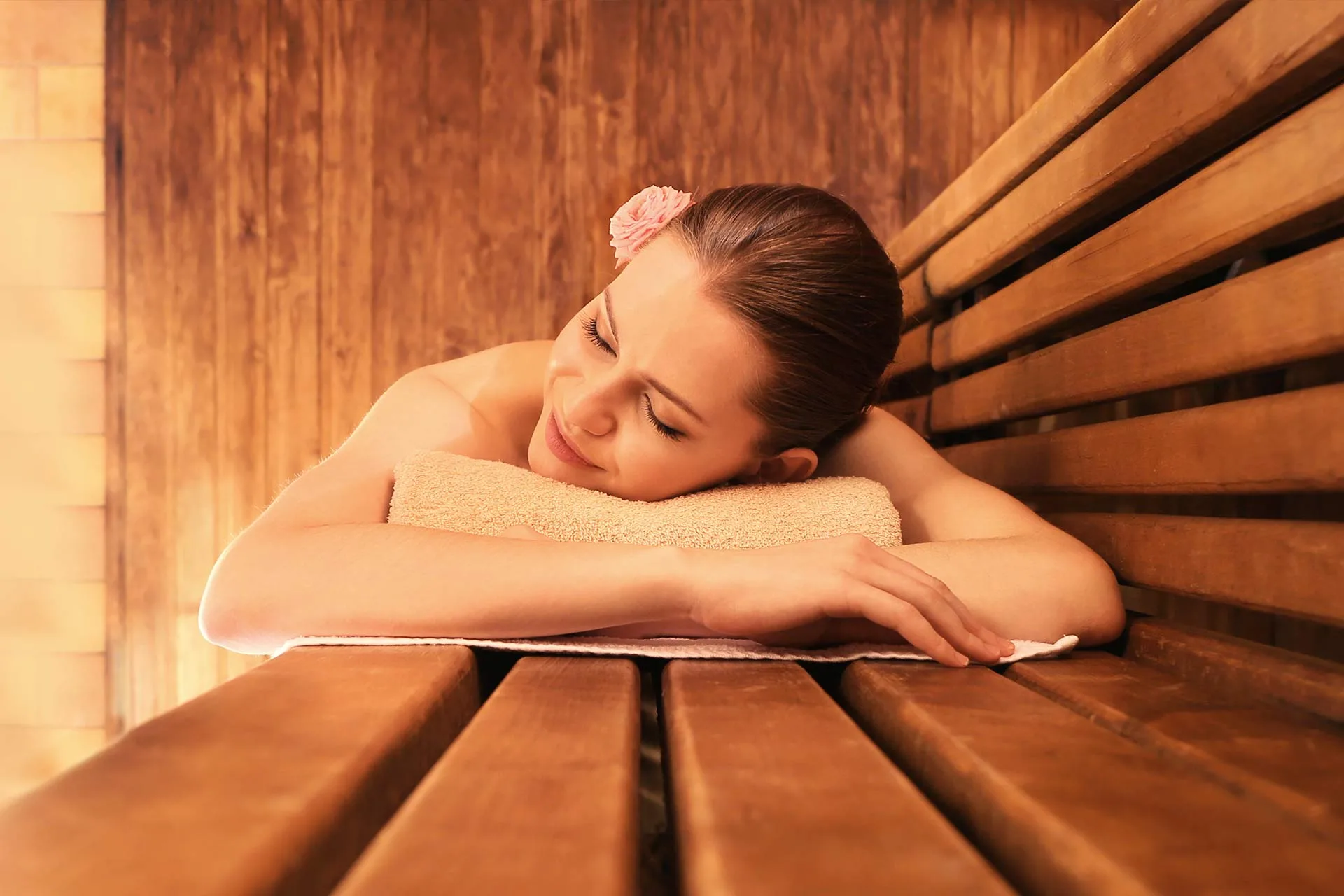
Whether you go to the sauna with family, friends, or as a couple during a wellness holiday or on a short trip – a sauna visit is always an investment in your own health and a welcome break to relax and unwind.
Why is the sauna considered healthy? – Benefits of sauna bathing

11.04.2025
- 3 Highlights
- Benefits and effects
- Wie viel Sauna ist gesund?
- Weight loss
- Mental health
- Detoxification
- Skin
- Immune system
- Sport
- Who should not use the sauna?
- Sauna with a cold
- Sauna with rheumatism
- Sauna with chronic respiratory diseases
- Germany – a country with a great passion for saunas
- Where is the best place to go to the sauna?
Frequent sweating in the sauna is generally considered healthy. And indeed, regular sauna use can support your health. Active sweating is associated with various positive effects on both body and mind. We'll explain the benefits of regular sauna sessions: from supporting weight loss and strengthening the immune system to improving mood. We'll take you on a short wellness journey into a sweaty pleasure that you can enjoy regularly – provided you don't have any pre-existing medical conditions.
What are the benefits and effects of using a sauna?
The comforting warmth feels especially wonderful on cold winter days, providing the warmth we so desperately crave. But why is the sauna considered healthy? The effects of sauna bathing haven’t yet been fully scientifically researched. However, in addition to the simple wellness benefits, regular sauna visits are attributed with further positive effects:
- The cardiovascular system is trained and strengthened.
- Blood circulation increases and metabolism is boosted, which optimizes the natural detoxification of skin, liver and mucous membranes.
- The immune system is trained and thus supported in its function, for example to ward off colds.
- Prevention: There is a lower risk of vascular diseases such as high blood pressure and cardiovascular diseases.
- Studies have observed a lowering effect on high blood pressure.
- It has been proven that frequent sauna visits are associated with a lower risk of dying from cardiovascular disease.
- There is evidence that frequent sauna visits could reduce the risk of neurological diseases such as dementia.
- Skin appearance can improve.
- Muscle tension can be relieved more easily in the heat.
- A sauna session promotes stress reduction and a relaxed state of mind (improved psychological well-being is possible).
- Sleep quality may also improve, and falling asleep may become easier.
- There is evidence that menopausal symptoms and depression could improve through frequent sauna use.
- Sauna visits have an anti-inflammatory effect, which is why they can apparently be effective in treating rheumatism (arthritis), among other conditions.
Wie viel Sauna ist gesund?
When it comes to sauna bathing, the more the merrier. Studies suggest that the effects are often stronger the more frequently you visit the sauna. However, you can most likely experience positive effects even with just one or two sauna visits per week. There’s also nothing wrong with daily sauna use – quite the opposite. It keeps your body fit and resilient.
Aim for no more than two to three 15-minute sauna sessions per day – at least if you plan to relax in a 90-degree sauna (e.g., a Finnish sauna). At lower temperatures, such as in a bio sauna, a laconium, or an infrared sauna, you can stay in the heat a little longer. Important: Take sufficiently long breaks between sessions.
Is the sauna healthy for the cardiovascular system?
The high temperatures in the sauna and the rapid temperature changes put a strain on the cardiovascular system. In this temperature fluctuation, the body must constantly maintain a constant temperature of around 37 degrees Celsius, which boosts the entire metabolism, causes profuse sweating, and makes the heart pump. This leads to the blood vessels constantly constricting and dilating, which makes them more flexible and can help prevent cardiovascular disease. The work that the heart and circulatory system perform in the sauna is indeed comparable to moderate exercise.
According to a Finnish study, using a sauna twice a week reduces the risk of sudden cardiac death by about 20 percent. The study suggests that regular sauna use could help protect against stroke, heart attack, and other heart diseases, which account for a large proportion of deaths. Studies have also observed blood pressure-lowering effects.
Caution if you have cardiovascular problems
Generally, if you have cardiovascular conditions such as heart failure or coronary artery disease, it’s advisable to first consult your doctor to determine if there are any contraindications to regular sauna use. If the doctor approves, even people with conditions like high blood pressure can enjoy saunas; however, sudden cold shocks that cause a rise in blood pressure are strictly prohibited. A gradual cool-down, such as a lukewarm shower, is recommended. Regular sauna visits make blood vessels more flexible, which benefits vascular health.
Do sauna visits help with weight loss?
Simply relax on a wellness holiday or sweat it out at home and watch the pounds melt away? Wouldn’t that be nice? Unfortunately, regular sauna use doesn’t have a direct weight-loss effect. However, the improved cardiovascular system and enhanced mental well-being can help you sleep better and embrace a healthier lifestyle with a balanced diet. Sauna use lowers the level of cortisol, the stress hormone that often triggers cravings and overeating.
If the scale moves in the desired direction after sauna visits, this is usually only due to the short-term fluid loss caused by the heat. The best recipe for weight loss remains consciously choosing the right foods, not exceeding the recommended calorie intake of around 2,000 kilocalories, and exercising regularly.
Is the sauna healthy for mental health?
Sauna bathing has a positive effect on our mental health. We can all attest to the wonderful feeling of relaxation and the mood-boosting effect. Sauna bathing promotes muscle relaxation, making us feel lighter – both physically and mentally. It helps reduce stress and negative emotions. This has an overall positive impact on our psychological well-being and mood.
Sauna bathing is ideal at home in your own sauna, but you can also wonderfully relax and unwind from everyday life with a sauna visit while on vacation or a wellness holiday (for example, in a wellness hotel in the beautiful Allgäu region with panoramic mountain views). Come as a couple, a family with children, with friends, or even alone, and feel yourself reconnect with your inner self and recharge with renewed energy.
Does visiting the sauna promote detoxification?
On this point, experts seem to be divided. On the one hand, no significantly higher levels of heavy metals (such as lead) have been found in sweat than usual. In fact, this detoxification effect via the skin appears to be greater during endurance sports than during sauna use, as higher quantities of, for example, lead are indeed found in sweat after exercise than after a sauna session.
On the other hand, the accelerated metabolism can support the function of detoxification organs such as the liver and kidneys, as well as stimulate lymphatic flow and thus promote detoxification of the body – independent of detoxification via the skin. And those who sweat more through regular sauna sessions ultimately eliminate more toxins through their sweat than those who don’t use saunas or exercise.
Is the sauna healthy for the skin?
Sauna sessions stimulate blood circulation, giving the skin a rosy glow and firmer tones. This makes fine lines appear less deep and gives the skin a healthy, smooth appearance. At the same time, the skin’s pores open up, helping to combat blemishes like pimples and blackheads. Sauna visits are also said to have a positive effect on people with skin conditions such as eczema, psoriasis, or hives. The belief that saunas make dry skin even drier is a misconception. Studies show the opposite is true. However, caution is advised for those with rosacea on the face, as sauna use can worsen the skin’s condition.
Insider tip: Combine your sauna visit with a spa treatment and pamper yourself with a wellness treatment focused on skincare. Especially after a sauna, your skin’s pores are wide open and your skin is receptive to nourishing skincare products.
Is the sauna healthy for the immune system?
The effects of sauna bathing on the immune system are also positive. By activating the metabolism, the production of our immune cells is stimulated. In addition, the mucous membranes of the nose, throat, and bronchi are better supplied with blood, which improves their defense against viruses, bacteria, and other pathogens. More mucus can be produced, which helps to kill germs. Therefore, regular sauna sessions can likely help prevent infections such as colds. Last but not least, the stress-reducing effect also has a positive impact on the immune system, as it generally functions better when we are relaxed.
Is the sauna healthy after exercise?
For well-trained individuals, such as competitive athletes, there’s nothing wrong with a sauna session after a workout to relax a bit. The heat helps muscles regenerate and build muscle. Athletic people benefit from this, and their cardiovascular system can handle the additional strain of sweating. However, experts don’t recommend a sauna session after training for those with little or no fitness, as the extra stress on the circulatory system could be too much of a challenge.
Who should not use the sauna?
If you have pre-existing medical conditions, you should generally consult your doctor first to determine whether a sauna visit would have positive effects or be detrimental in your case. You should refrain from this sweaty pleasure – or at least seek your doctor’s advice – if you have any of the following health problems:
- Acute infections (colds, coughs such as with bronchitis)
- Acute inflammation
- Open wounds
- High blood pressure
- Lung diseases such as asthma, COPD (chronic obstructive pulmonary disease)
- Cardiovascular problems (e.g. cardiac arrhythmias, heart failure)
- Diabetes
- Epilepsy
- Kidney disease
- Overactive thyroid (not well controlled with medication)
- Multiple sclerosis
Is the sauna healthy when you have a cold?
Is it healthy to go to the sauna when you have a cold to support your immune system? The answer is no. If you already have a runny nose, sore throat, cough, and perhaps even a fever, a sauna session is counterproductive. At that point, your body is already fully occupied fighting off the invading microorganisms. In this case, the heat in the sauna only weakens your immune system, not strengthens it.
However, if a cold with a sore throat or runny nose is just starting, a sauna (with lower temperatures) can indeed help boost and improve the immune response to the invaders. In this case, a steam sauna is recommended, as the higher humidity doesn’t dry out the mucous membranes. Dry mucous membranes are a breeding ground for all kinds of viruses and weaken our immune system, as they can penetrate the body particularly easily through them. At the onset of a cold, it’s also better to avoid cold showers for cooling down. Instead, you should cool your body naturally.
Sauna with rheumatism – a good idea?
For people with rheumatism (rheumatoid arthritis), the sauna can provide beneficial support. The improved blood circulation relaxes muscles and can alleviate pain. Additionally, the heat enhances the supply of nutrients to muscles and joints, and the immune system is positively influenced, which can lead to beneficial effects. Furthermore, the effective stress reduction and relaxation achieved during a sauna session can also counteract pain. Stress and tension often exacerbate symptoms in rheumatism patients.
However, if you are currently experiencing an acute flare-up, you should avoid saunas of any kind. Heat can exacerbate the acute inflammation and thus intensify the pain.
Sauna with chronic respiratory diseases
If you have COPD (chronic obstructive pulmonary disease) or asthma, you should consult your doctor before using a sauna, as they are best able to assess the severity of your condition and your overall health. In severe and frequent cases of shortness of breath and reduced lung function, it is best to avoid using a sauna altogether.
For milder symptoms, sauna sessions can help ease breathing. This is especially true for saunas with high humidity (steam saunas), where the bronchial mucosa is moistened rather than dried out and irritated. The heat relaxes the bronchial muscles, which can support breathing. The sauna climate also promotes the loosening of stubborn mucus, making it easier to cough up. This further helps to breathe more freely.
General tip
Always listen to your body. If you feel unwell in the sauna, for example, if you become dizzy or suddenly get a headache, you should leave the sauna promptly. Then perhaps try the sauna again another day.
Germany – a country with a great passion for saunas
Interestingly, Germany is a nation of sauna enthusiasts. In 2020, approximately 25 million sauna lovers regularly flocked to these sweat-inducing establishments. The typical German sauna-goer is usually between 40 and 60 years old. However, many children also regularly enjoy these sweaty wellness sessions with their parents to relax and unwind. You can learn how to use a sauna correctly in our article “Sauna Etiquette”.
Eine wunderbare Gegend für einen Sauna- und Wellnessurlaub ist Bayern, speziell das Allgäu mit seinen fantastischen Seen, Bergen, Schlössern und Wäldern. Hier finden Sie sowohl entspannende Angebote in und außerhalb von Wellness Hotels als auch unzählige Freizeitaktivitäten – vom Wandern über Eisstockschießen bis hin zu traumhaften Sehenswürdigkeiten wie Schloss Neuschwanstein.
Where is the best place to go to the sauna?
There are many options for a sauna visit. Besides a home sauna, wellness hotels, spas, and thermal baths entice visitors with wonderful sauna and wellness offerings. These facilities are ideal for regularly taking time out for rest, relaxation, and recharging your batteries. Furthermore, you can choose from a wide variety of sauna types: you can enjoy the intense heat of a Finnish sauna, or you can find more relaxing temperatures in a steam room, bio sauna, infrared sauna, hammam, or laconium.
Are you longing for a wellness break in the Allgäu region? Then what are you waiting for? Grab your girlfriend, travel as a couple, or with your family to Bavaria and experience the healing power of the mountains and the fresh mountain air. Try the health-promoting Kneipp therapy, discover beautiful hiking trails and royal castles, and relax by crystal-clear mountain lakes like the Forggensee – we wish you an unforgettable stay.