Read here what Kneipp therapy is all about, what effect this holistic therapy has on body, mind and soul, and how to do Kneipp correctly according to all the rules – regardless of whether you want to perform the treatment at home, in a spa or wellness hotel, or in Kneipp resorts at public Kneipp facilities.
Kneipp therapy: Effects and instructions

11.04.2025
There's so much more to the holistic Kneipp healing method than just cold showers and stork-like footsteps in water: it's based on five pillars that aim to strengthen our health and immune system. A Kneipp cure can be used for prevention or treatment. In the Allgäu region, you can experience Sebastian Kneipp's holistic health concept firsthand. Not only Kneipp's hometown of Wörishofen in the Allgäu, but also the historic town of Füssen and the smaller, idyllic village of Hopfen am See are recognized air and Kneipp health resorts. Besides public Kneipp pools, they offer many opportunities to experience Kneipp's teachings.
Kneipp therapy: What exactly is it?
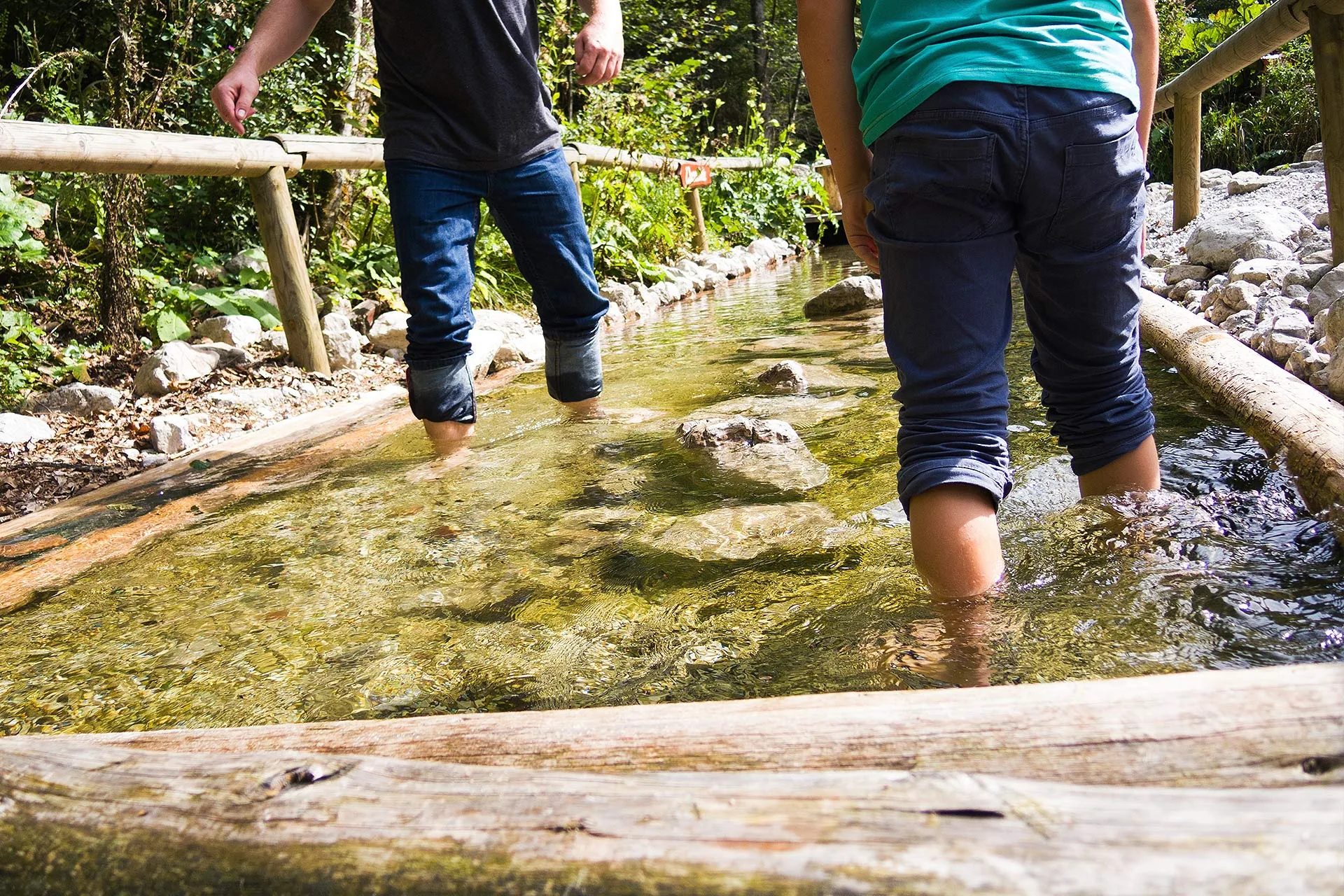
When we talk about Kneipp therapy, we primarily think of wading through knee-deep, cold water. The way we wade through the water resembles the gait of a stork. Kneipp therapy is a recognized natural healing method, developed in the 19th century – between 1841 and 1897 – by its namesake, the German priest Sebastian Kneipp (1821–1897).
As a young man, he himself suffered from severe pulmonary tuberculosis and subsequently began a self-experiment after reading about cold water therapies: He took regular, short, and cold baths in the Danube. The water temperatures ranged between five and ten degrees Celsius, and they helped him recover. This marked the beginning of his Kneipp-style hydrotherapy.
The goals of Kneipp therapy
The aims of Kneipp’s natural methods include maintaining and restoring health, as well as harmonizing body, mind, and soul. Kneipp therapy, through regular exercise and hardening, is intended to stimulate self-healing powers and circulation, promote health, and strengthen the immune system – whether for treating existing ailments or preventively, for example, to ward off colds or flu-like infections.
Interestingly, in 2015 the German UNESCO Commission included Kneipp therapy in the list of intangible cultural heritage.
The 5 elements and pillars of Kneipp therapy
Kneipps ganzheitliches Konzept setzt auf die Kraft der Natur. Es sind aber nicht nur die berühmten Wasseranwendungen wie Kneipp-Güsse, Wassertreten – also das Gehen durch knietiefes kaltes Wasser, kalte Armbäder, Wechselfußbäder und kalte Gesichtsduschen, die das Naturheilverfahren ausmachen. Weitere Elemente ergänzen die ganzheitliche Kneipp-Therapie, die insgesamt auf fünf Prinzipien basiert: auf der Kraft von Wasser, einer gesunden Ernährung, auf Heilpflanzen und Heilkräuter, Bewegung und einer ausgeglichenen Lebensführung.
Water therapy (hydrotherapy)
There are around 120 water applications in Kneipp’s water therapy, such as water treading, washings, showers, wraps, sitz baths, full or partial baths, with or without additives (medicinal plants, medicinal herbs), ascending foot and wrist baths and many more applications.
Nutritional therapy
A balanced diet, rich in whole grains and containing plenty of fruits and vegetables, is a central tenet of Kneipp’s philosophy and forms the basis for a healthy life. He emphasized the importance of avoiding rigid rules and prohibitions regarding nutrition. Instead, Kneipp focused on consuming simple, unprocessed, and nutritious (regional) foods. Raw foods were preferred whenever possible. Ideally, these meals, prepared at home, should be eaten regularly throughout the day (smaller portions three to four times daily).
Movement therapy
For Kneipp, exercise and health were inextricably linked. Sport and exercise reduce stress and can prevent illness. Light sports and regular movement in everyday life should ideally be performed outdoors, and avoiding restrictive clothing during exercise also promotes physical well-being. His motto: Always focus on a healthy balance, rather than striving for perfection and self-optimization.
Insider tip: Experience the important pillar of Kneipp therapy firsthand. For example, on a roughly 23-kilometer Kneipp bike tour around Füssen in the Allgäu region. The bike tour is easy and takes about two hours. Along the way, you’ll pass numerous Kneipp stations with inviting Kneipp pools. There’s a station along the route for each of the Kneipp pillars.
Phytotherapy: Back to nature
Back to nature: For Kneipp, there’s a herb for almost every ailment. This is also reflected in his health philosophy. As a priest, he spent years studying around 40 native plants for their healing effects through self-experimentation. After promising results, Kneipp supplemented his hydrotherapy treatments with phytotherapy. He utilized the health-promoting powers of medicinal plants and herbs, using them in the form of teas, lozenges, bath additives, or ointments for internal or external treatment.
Internally, medicinal plants are said to dissolve and eliminate harmful substances from the body, thereby strengthening the organism. Applied externally, the plant ingredients alleviate, among other things, muscle tension, bruises, and joint pain.
Insider tip: Would you like to learn more about the healing powers of nature? How about a short herb walk in Hopfen am See in the Allgäu region? In summer, there are exciting guided tours such as “Nature, Pleasure, Balance – Experience the Healing Power of the Allgäu.” Following the principles of Kneipp, you’ll kill three birds with one stone: You’ll get fresh air, enjoy a relaxing break in nature, and learn about the effects of local medicinal plants and herbs.
Order therapy: Work-life balance according to Kneipp
Taking sufficient breaks, pausing to breathe, relaxing, and finding peace is not easy to implement in the stressful everyday life with all its challenges. Yet, it is precisely a life of balance and harmony, in accord with work and (private) life, that forms an important pillar of Kneipp’s holistic health concept.
Those who practice more mindfulness in their lives, regularly take short breaks to switch off, deeply relax, and celebrate life with all their senses will also find a harmonious rhythm of life. Healthy sleep, self-care, and relaxation techniques such as yoga, meditation, or mindfulness training are also important aspects of bringing order to one’s life and ensuring physical and mental balance.
Tip: A short wellness trip to the Allgäu region, Kneipp’s home region, is also highly recommended for a relaxing break.
Kneipp facilities – Where can you try Kneipp therapy?
Whether in nature, city centers, health resorts, wellness and spa facilities, luxury hotels, or spa parks – typical Kneipp facilities usually offer foot baths and arm baths. Many are nestled in lakes (such as Lake Hopfensee) or flowing waters. Kneipp oases serve as a brief respite and a counterpoint to the stresses of everyday life. They are places for peace, relaxation, and mindfulness – public Kneipp facilities in the Allgäu region invite all Kneipp enthusiasts and the curious to linger.
The effects of Kneipp therapy: How healthy are water treading and similar treatments?
Health in harmony with nature – that’s what Kneipp therapy is all about, and the invigorating water treatments are an integral part of every Kneipp cure. They have a beneficial and revitalizing effect not only on hot summer days, but also strengthen us in winter. What exactly happens in the body when we practice Kneipp therapy, and what effects does a Kneipp cure have on our health?
This is what happens in the body when we do Kneipp therapy
It is the alternation between heat and cold that creates the effect of Kneipp therapy. When we wade through the cold water of a Kneipp pool with our feet and legs, the cold stimulus causes our blood vessels to constrict. When we move our legs and feet out of the cold water in a stork-like motion, the blood vessels dilate again. You are probably familiar with similar stimulus-response principles from sauna bathing.
The effects of Kneipp therapy on our health
Regular Kneipp therapy is said to have a positive effect on our body and mind. The potential health benefits for our physical and mental well-being include:
- Kneipp therapy activates our self-healing powers.
- Kneipp therapy strengthens the immune system
- Kneipp therapy stimulates blood circulation and the circulatory system.
- Kneipp therapy stimulates the metabolism and the nervous system.
- Kneipp therapy produces heat in the muscles, which then relax.
- Kneipp therapy relieves pain at the nerve endings through the cold stimulus.
- Kneipp therapy promotes sleep.
- Kneipp therapy has a revitalizing and relaxing effect at the same time.
- Kneipp therapy strengthens the veins.
Kneipp’s areas of application
Kneipp cures can be used for prevention or as a supportive treatment for various illnesses. The many positive effects on our body and mind result in the following possible applications of Kneipp water treatments:
- Cardiovascular problems, e.g., circulatory disorders and congestion in the legs, low blood pressure (hypotension)
- Strengthening the immune system
- Sleep disorders
- Rheumatic conditions, osteoarthritis
- Pain, e.g. back pain, headaches, migraines
- Exhaustion, fatigue, tiredness
Kneipping instructions: How to do it properly
Water therapy is the best-known application of the five pillars of Kneipp medicine. Kneipp’s showers, wraps, and baths are a truly simple and natural way to improve your health. The following instructions explain how the individual water applications work for the legs, arms, and face:
Kneipp water treading
The best-known application of Kneipp hydrotherapy is walking through cold water. It is said to strengthen the immune system, fortify the veins, and stimulate blood circulation. Regular water treading is also believed to help us fall asleep more easily at night. Here’s how to do Kneipp water treading correctly:
- Start with your right (farther from the heart) leg. Step into the cold Kneipp basin with your right foot and wade through the water like a stork, alternating both legs and feet.
- Alternately lift your right and then your left foot completely out of the water (bend the toes downward) while water treading.
- Now use your hands to wipe the cold water from your legs down to your feet.
Good to know: If the cold stimulus becomes too intense, stop the water treading. To boost warming, you can put on warming socks and move your feet.
Kneipp knee affusions
Regular knee affusions stimulate blood circulation in the legs, train the blood vessels, and should be used particularly in cases of circulatory disorders and congestion in the legs, hypotension, migraines, and headaches. Here’s how a Kneipp knee affusion works:
- Start on the outside of the right (farther from the heart) leg.
- Pour cold water up to above the knee (about a hand’s width) and form a water curtain around the lower leg for five seconds.
- Now, move the water jet from the knee along the inside of the lower leg to the heel.
- Repeat the process on the outside of the left leg.
- Finish the knee affusion by pouring water over the soles of both feet.
Kneipp cold arm baths
Feeling tired and worn out? Then a refreshing, cold Kneipp arm bath might be just what you need. Kneipp arm baths are considered a real pick-me-up when feeling run down. And, provided they are done regularly, they also strengthen our immune system. They also stimulate blood circulation in the arms, blood flow to the heart muscle, and metabolism. They can even relieve elbow pain. Here’s how to do a Kneipp arm bath correctly:
- First immerse your right (farther from the heart) arm up to the middle of the upper arm in the basin, which should have a temperature between 12 and 18 degrees Celsius.
- Make circular arm movements with your forearms in the basin.
- Keep your arms in the cold water for about 30 to 40 seconds until you feel a distinct cold sensation.
- After your arm bath, wipe off the water with your hand – please do not dry with a towel.
- To support warming of the arm, put on something long-sleeved and do arm movements.
- Now do the same with the left arm.
- Pay attention to your breathing during the arm bath. It should be calm and deep. If you also smile, your body will produce additional endorphins, which are natural opioids that have a pain-relieving and euphoric effect.
Good to know: The refreshing boost in the evening won’t prevent you from falling asleep, because the arm baths are stimulating but not exciting.
Kneipp facial affusion: a beauty affusion for a radiant complexion
A Kneipp facial affusion can be wonderfully integrated into your daily skincare routine. Also known as a kind of “beauty affusion,” regular facial affusions ensure radiant and firmer skin. They also relieve headaches and help when we feel exhausted and tired. In summer, when high temperatures get to us, such a facial affusion is a refreshing change – for the whole body. Here’s how to perform a Kneipp facial affusion correctly:
- Lean over a shower or bathtub and turn on the tap so that the water jet has a comfortable strength.
- Now guide the stream of water from the right temple across the forehead to the right temple and back again.
- Once you reach your left temple, move the water jet up and down three times, then do the same on the right side.
- Finish the facial rinse with circular movements over the entire face.
- Even when sprinkling water on the face, a towel is not used for drying; instead, the water is wiped off with the hands.
Tip: To prevent the cold water from running down your neck and back, you can place a towel protectively around your neck.
When should you avoid kneipping?
Only perform Kneipp treatments such as hydrotherapy or exercise therapy if you are fit and not coming down with a cold or feeling cold. You should also refrain from Kneipp therapy if you have open wounds.
There are possible contraindications, such as poorly controlled high blood pressure (hypertension) or other heart conditions like heart failure or unstable angina pectoris, which you should have checked by a doctor before a Kneipp cure due to the cold stimulus during water treading or arm baths. The same applies to severe skin diseases, epilepsy, or varicose veins.
You should avoid facial affusions if you are suffering from acute sinusitis, facial nerve inflammation, or eye conditions such as cataracts or glaucoma. Knee affusions are contraindicated for people with acute kidney or bladder problems.
Rules for Kneipp applications
Before you start water treading and the like, be sure to observe a few rules:
- Don’t freeze: Before using cold water for water treatments, make sure you are not cold and warm up thoroughly. Do not perform cold water treatments on a cold body.
- Set gentler stimuli: Kneipp therapy should not be a painful experience. Therefore, avoid excessively strong cold stimuli or cold shocks; instead, opt for gentler methods. Always pay attention to your body’s reaction during cold applications.
- End cold application: If the skin shows good blood circulation and redness, if it tingles and you feel a pulling sensation in your arms or legs, stop using the product.
- Take breaks between two applications: Do not repeat Kneipp treatments immediately one after the other, but take a break of at least 1 hour so that your body can process the cold stimulus.
- Do not dry: Whether after water treading or arm baths, after knee or face showers – always wipe off the water with your hands and do not dry the body areas with a towel.
- Warm up body regions: To accelerate the warming process after the cold stimulus, lie down in bed, put on warm clothes, or move your feet, arms, and legs, for example, with circular movements.
- Breathe calmly and deeply.: While you strut through the cold water like a stork, or even during a knee, arm or face shower, don’t forget to pay attention to calm and deep breathing.
- Avoid drafts: During a Kneipp treatment, you should avoid drafts and ensure warm rooms.
Water treading: How often and for how long should you kneipp?
When is the ideal time for a Kneipp cure? Morning or evening? You can decide when you want to do a Kneipp water treatment according to your individual needs. Those of us who aren’t morning people benefit from a morning arm or face affusion for refreshment and to wake up, while early risers might need a pick-me-up in the afternoon. Regardless of whether you’re an early bird or a night owl, water treatments in the late morning or early afternoon are always a good idea.
How long you can endure Kneipp water treading is also a matter of individual preference. The duration can vary between 30 seconds and 3 minutes, and 30 to 40 seconds for arm baths. Always pay attention to how your body reacts to the cold stimulus. It will indicate, through redness or a pulling sensation, when you’ve had enough of the cold.
Kneipping and sauna at Hopfensee in the Allgäu
Kneipp therapy can be wonderfully integrated into a holiday around Lake Hopfensee, for example during a romantic wellness break as a couple, a short wellness trip with friends, or a family holiday in the Allgäu region. Whether in a classic Kneipp pool in thermal baths, saunas, spas and wellness centers, or outdoors by the sea, lakes, rivers and streams, or in your own bathroom at home: wherever there is cold water below 18 degrees Celsius that reaches up to your knees, Kneipp water treading is possible.
Kneipping, sauna and bathing
In winter, when there’s snow in the Allgäu region, you can walk barefoot through it and strengthen your immune system. Sebastian Kneipp also recommended walking barefoot through snow or dew in winter. Once your feet are warmed up and reddened, it’s time to warm up again! And what better way to do that than in a sauna? Kneipp therapy and proper sauna use go perfectly together and provide a relaxing break from everyday stress at home.
You can also relax your soul, warm up after Kneipp therapy and take a deep breath with a soothing relaxation bath with medicinal herbs such as rosemary, dandelion or hops, or during a delightful tea session with herbs from the Allgäu region.
Kneipp dew treading and barefoot walking – how to do it properly
- Your feet should be nice and warm before you start snow or dew treading.
- In summer, you can walk barefoot through the morning dew for 2 to 3 minutes.
- In winter, around 30 seconds in the snow is enough to achieve the health-promoting effects.
- Pay conscious attention to your feet as they are refreshed and the stimulating effect on your circulation unfolds.
- After the application: warm your feet up again! Put on warm socks and shoes and get moving. Sebastian Kneipp recommended going for a brisk walk for about 15 minutes.
Insider tip for your home: Instead of walking barefoot in the snow or dew in the morning, you can also walk barefoot through your own four walls and achieve similar effects if you immerse your feet in cold water beforehand and do not dry them afterwards, but warm them up.